Getting there
- Flights to Biarritz (BIQ) 40 km from the start
- Flights to Bilbao (BIO) 135 km from the start
Treks / France · Spain
France · Spain · Nearest city: Pamplona (also Bilbao, Santiago de Compostela)
The world's most famous pilgrimage walk, from Saint-Jean-Pied-de-Port across northern Spain to Santiago de Compostela.
Watch out: The challenge is doing it day after day for a month. Look after your feet from day one.
It's the world's most famous pilgrimage walk, chosen as much for the people you meet and the time to think as for the scenery.
Some of these are affiliate links: if you book through them we may earn a small commission, at no extra cost to you. We only list services that fit this trek.
Phone plans from the EU and EEA roam here at home prices. Coming from the US, UK or elsewhere? A Europe data eSIM is usually far cheaper than roaming.
Expect long stretches with no signal on the trail. Download offline maps and our GPX before you start.
Most travel insurance includes hiking at this height. Check that hiking is listed and that medical evacuation is covered.
Rescue is not the same as evacuation. Travel insurance usually pays to fly you to hospital, but not always for the search and rescue itself. Read the policy's "search and rescue" section, or join an Alpine club: membership of the Austrian Alpenverein (it has an English-speaking UK section) includes rescue cover of up to €25,000.
True Traveller sells only to UK and EEA residents. Always check the altitude limit and your country of residence in the policy wording. Our trekking insurance guide explains what to look for.
Rules vary. In many mountain areas a bivouac from dusk to dawn is tolerated, but national parks have strict zones. Check the park's rules before you pitch.
Rules change and differ between parks. Check with the local park or tourist office before you pitch a tent.
Map layers load on the live site. Use the overview below meanwhile.
Straight lines between stops Start / finish Stop on the way Nearest city
Switch between Topo, Satellite and Street layers with the layer button, and turn on the marked hiking trails overlay. We don't have the exact trail for this route yet, so stops are joined with straight lines. Always carry a proper hiking map on the trail.
Stops: Saint-Jean-Pied-de-Port → Pamplona → Burgos → León → Ponferrada → Santiago de Compostela
Best time: April to October
March to May
The best time for most people: green hills, wildflowers and comfortable temperatures.
Bring
June to August
Hot, often above 30°C, with little shade. Start at dawn and rest in the afternoon. Fire risk can close paths.
Bring
September to November
Warm sea and settled weather in early autumn, with the first storms arriving later.
Bring
Expect 7–10 hour days. Start early, eat little and often, and know your turnaround time.
Long flat days on hard surfaces cause more blisters than mountains. Break in your shoes, tape hot spots early and change socks at lunch.
Start at dawn, rest in the shade at midday, and carry more water than you think. Electrolytes help.
Plan for rain on most days. A proper waterproof jacket, a pack liner and quick-dry clothes keep you comfortable.
6 photos taken on and around the route by Wikimedia Commons photographers. Tap one to see it bigger.
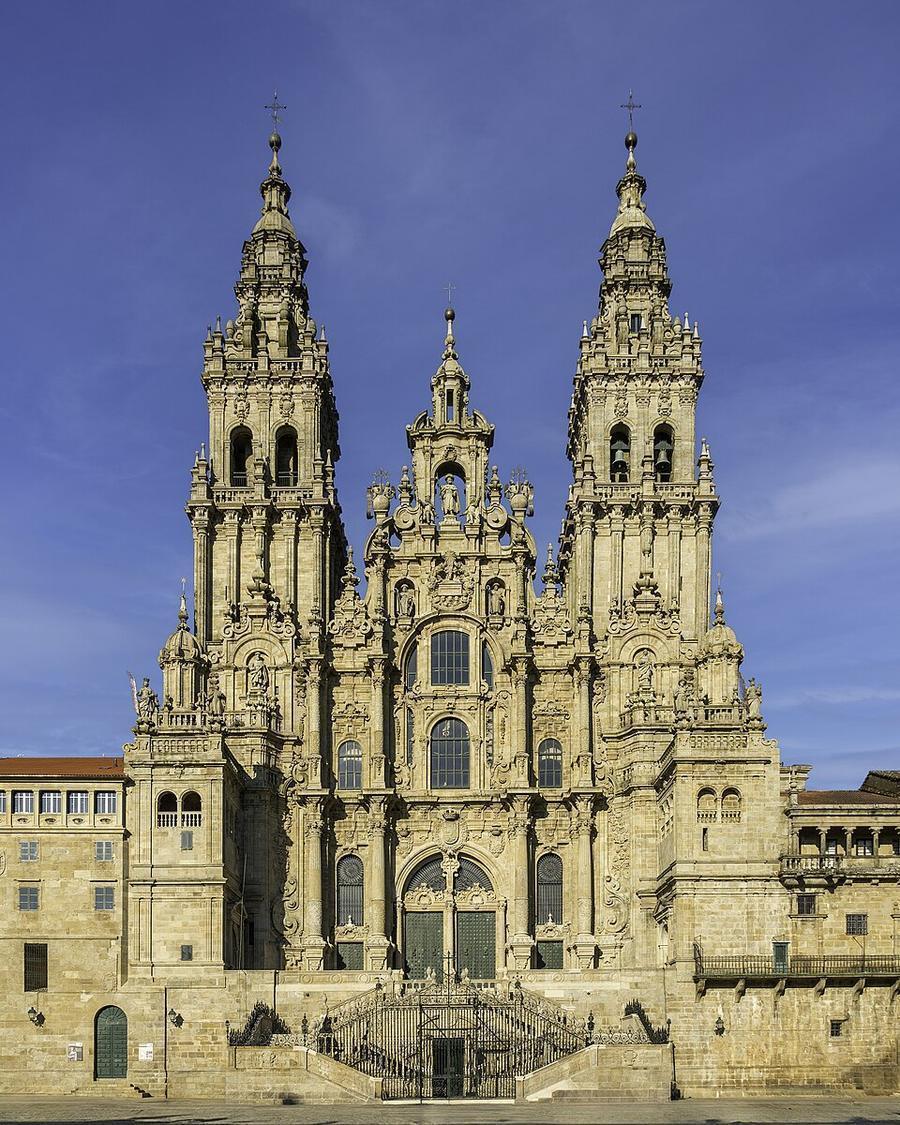
Photo credits: Santiago cathedral by Fernando, CC BY-SA 4.0, via Wikimedia Commons; Saint-Jean-Pied-de-Port by Hayden Soloviev, CC BY 4.0, via Wikimedia Commons; Monumento a los Fueros Pamplona by José Luis Filpo Cabana, CC BY-SA 4.0, via Wikimedia Commons; Panorama Donibane Garazi by Quahadi, CC BY-SA 3.0, via Wikimedia Commons; Santiago de Compostela - panoramio by JCNazza, CC BY 3.0, via Wikimedia Commons; Vista del centro de Burgos by Macarrones, CC BY-SA 4.0, via Wikimedia Commons. Photos resized for the web. Figures are approximate and vary with the variant you choose.


.jpg)

.jpg)
